Options Selling University
Learn how to sell options, understand the risks, and keep track of your trades. Start with the basics or jump to a topic you want to work on. The whole course is free.
Course catalogue99 lessons
Course levels
- 100Foundations16
New to options? Learn how contracts work, why prices change, and how to read the five Greeks.
No experience needed
- 200Selling Premium25
Work through cash-secured puts, covered calls, the wheel, and spreads. Learn how to open and manage each trade.
Start after Foundations
- 300Risk & Execution17
Learn how to size positions, plan around market events, and work within your broker’s account rules.
For readers familiar with selling options
- 400Managing Your Portfolio41
Keep your records in order, track cost basis, review your returns, and prepare for tax season.
For readers with trades to review
100Foundations
16 lessonsNo experience needed
New to options? Learn how contracts work, why prices change, and how to read the five Greeks.
Foundations
6 lessonsStart with the parts of an option contract, then learn what buyers and sellers agree to and what happens at expiration.
What an Option Contract Actually Is
Assemble a contract field by field, and see exactly where the money is when you buy or sell one.
Beginner9 minCalls and Puts, Side by Side
One interactive chart, two contract types. Flip between them and the difference stops being abstract.
Beginner8 minWhy Selling an Option Is Not Just Buying in Reverse
The same contract, from both sides. This is the lesson that explains why premium selling pays at all.
Beginner10 minMoneyness: Where the Stock Sits Relative to Your Strike
Move the stock price through your strike and watch the labels (and the money) change.
Beginner7 minEvery Premium Is Two Numbers Stacked Together
Split any premium into its two halves and watch which one disappears as expiration approaches.
Beginner9 minWhat Actually Happens on Expiration Day
Set the closing price and follow the shares and cash that actually change hands.
Intermediate11 min
Reading the Market
4 lessonsLearn to read an option chain, compare bid and ask prices, and understand what implied volatility tells you.
Reading an Option Chain Without Getting Lost
A live chain you can click. Every column explained, every strike loadable into a payoff chart.
Beginner12 minWhat a Wide Spread Really Costs You
Run twenty round trips through a wide spread and a tight one, and compare the damage.
Intermediate9 minImplied Volatility Is a Price, Not a Prediction
Move one slider and watch an entire chain reprice. IV is an output, not a forecast.
Intermediate12 minIs This IV High? Rank, Percentile and Skew
Drag a marker along a year of IV and watch rank and percentile disagree, sometimes badly.
Advanced11 min
The Greeks
6 lessonsExplore each Greek with an interactive example. Change the inputs to see how an option’s estimated value responds.
Delta: Three Questions, One Number
Delta answers three questions at once, and traders routinely confuse the useful two with the misleading third.
Intermediate13 minGamma: Why Delta Refuses to Stay Still
Step the stock price and watch delta itself move. This is why short options get dangerous late.
Intermediate11 minTheta: Watching Time Value Bleed Out
Press play and watch the time value drain out day by day. The curve's shape is the whole lesson.
Intermediate12 minVega: The Greek That Moves Without the Stock
Shock volatility by ten points and watch your P&L move while the stock does nothing.
Intermediate10 minRho: Small, Until the Contract Is Long-Dated
Move the rate slider: 30-day options barely notice, LEAPS reprice noticeably.
Advanced7 minAll Five Greeks on One Screen
Four inputs, six outputs, all live. The consolidation page for everything in this track.
Advanced10 min
200Selling Premium
25 lessonsStart after Foundations
Work through cash-secured puts, covered calls, the wheel, and spreads. Learn how to open and manage each trade.
Income Strategies
7 lessonsLearn how cash-secured puts, covered calls, and the wheel work, including how to choose a strike, roll a position, and decide when to close.
Cash-Secured Puts, From Cash to Assignment
Move the strike and watch the capital, the breakeven and the annualised return move with it.
Beginner14 minCovered Calls and the Upside You Sell
Set your cost basis, pick a strike, and see precisely which part of the upside you just sold.
Beginner13 minThe Wheel Strategy
The full cycle: sell puts, take assignment, sell calls, repeat, and what it does to your cost basis.
Intermediate12 minChoosing a Strike: What 0.16 Delta Buys You
Three delta targets, side by side. The premium-versus-probability tradeoff stops being a slogan.
Intermediate12 minRolling: Buying Time, and What It Costs
Close one leg, open another. Watch the net credit, the new breakeven and the blended return update.
Intermediate14 minClosing Early: The 50% Rule, Tested
Close at 50% or hold to expiry? Compare both across every DTE and see where the crossover sits.
Advanced13 minCovered Calls vs Just Holding the Stock
Same stock, five different markets. One of the five is where covered calls hurt.
Intermediate11 min
Spreads & Multi-Leg
6 lessonsSee how option contracts work together in a spread. Compare the potential profit, loss, and trade-offs of each setup.
How Multiple Legs Become One Payoff
Add legs one at a time and watch the combined curve assemble from its parts.
Intermediate10 minBull Put Spreads: A CSP That Costs Less
Buy a put below your short put: capital collapses, so does premium. Compare both directly.
Intermediate12 minBear Call Spreads: Selling the Upside
The mirror image on the call side, and why it is not a covered call.
Intermediate10 minDebit Spreads: Buying a Range Instead of a Direction
Pay to open instead of collecting, and the whole calculation inverts.
Intermediate10 minIron Condors: Getting Paid for a Range
Two credit spreads facing each other. Drag each wing and watch the tent reshape.
Advanced13 minStraddles and Strangles: Trading Movement Itself
Direction stops mattering; size of the move takes over. Both sides of the trade, charted.
Advanced11 min
Strategy Playbook
12 lessonsExplore collars, calendars, diagonals, and other combinations. Use the examples to compare how each strategy works.
Running a Covered Call Without Owning the Shares
A LEAPS call stands in for 100 shares, at a fraction of the capital and with a new risk.
Advanced13 minPaying for Downside Protection With Your Upside
Sell the upside to fund the downside, and hold stock in the band between.
Intermediate11 minSelling One Expiration and Buying Another
Same strike, two dates. The near leg decays faster, and you want the stock to do nothing.
Advanced12 minA Calendar That Also Takes a Direction
Change both the strike and the date, and a calendar becomes a directional position.
Advanced11 minSelling More Than You Buy
It looks like a spread until the extra short leg runs out of cover. Find that point first.
Advanced11 minA Structure With No Upside Risk At All
Size the credit above the call spread's width and the upside risk disappears entirely.
Advanced11 minBuying Insurance on Shares You Own
It caps the loss and charges rent every month. Model the annual drag before committing.
Intermediate10 minRecreating a Share Position From Two Options
Long call, short put, same strike. Put-call parity says it is stock, almost.
Advanced10 minWhy the Last Day Behaves Differently
Delta becomes a switch and gamma runs the position. A different activity, not a faster one.
Advanced11 minLong-Dated Contracts and What Changes
Slow decay, real rate sensitivity, and behaviour much closer to stock than to a monthly.
Advanced10 minWheeling an Index Fund Instead of a Company
No single-name blowup risk, less premium, and possibly a different tax regime.
Intermediate11 minSpreading Positions Across Several Expirations
One expiration means one Friday decides your month. Staggering fixes income and risk together.
Intermediate9 min
300Risk & Execution
17 lessonsFor readers familiar with selling options
Learn how to size positions, plan around market events, and work within your broker’s account rules.
Managing Risk
8 lessonsWork through position sizing, losing trades, and event risk so you can assess what a trade could cost you before you open it.
Probability of Profit, and Why It Is Not Enough
A price distribution behind the payoff curve. A 90% win rate and a losing strategy coexist happily.
Advanced14 minHow Many Contracts Can You Actually Sell?
Enter an account size and find out how many CSPs it genuinely secures. Usually fewer than expected.
Intermediate11 minEarnings: The Setup That Punishes Being Right
IV spikes into the print and collapses after. Being right about direction is not enough.
Advanced12 minDeciding Whether a Stock Belongs in a Wheel
A checklist you apply yourself. Deliberately not a list of tickers, those age badly.
Intermediate11 minChecking a Chain Is Worth Trading
Four numbers, four thresholds, and what ignoring them costs over a year of round trips.
Intermediate9 minDeciding Whether to Hold Through an Earnings Print
The premium is rich because the risk is real. Price the decision rather than defaulting.
Intermediate10 minIs This Volatility High Enough to Sell
Rank and percentile disagree. Both are useful, and a high reading is sometimes a warning.
Advanced10 minFive Positions That Are Really One
Five puts on five tech names is one bet with five tickets. Measure it before the market does.
Advanced10 min
Account Mechanics
6 lessonsUnderstand buying power, margin requirements, and account restrictions before they affect a trade.
Cash Account or Margin for Running a Wheel
One makes the collateral literal; the other quietly turns a secured put into a leveraged one.
Intermediate10 minWhy Selling One Put Consumed That Much Buying Power
The reduction is rarely what you expect, and it moves during the day. Here is the formula.
Intermediate9 minThe Day Trader Rule Can Catch a Premium Seller
Closing the same day you opened counts, including a roll. Under $25k that limit binds fast.
Intermediate8 minAssigned Without the Cash to Cover It
The shares arrive anyway. Here is the sequence, the cost, and the least bad way out.
Advanced9 minPin Risk: When Expiration Leaves You Holding Shares
A worked expiration path showing how one assigned leg can leave stock exposure after the hedge expires.
Advanced7 minAdjusted Options: Check What the Contract Actually Delivers
Why a familiar strike and ticker can hide a different obligation after a split, merger or distribution.
Advanced7 min
Brokers & Platforms
3 lessonsLearn about options approval levels, order tickets, roll orders, and exporting your trade history.
Getting Your Trade History Out of a Broker
Where each broker hides the export, and the fields every one of them leaves out.
Beginner11 minRolling as One Order Instead of Two
Legging out and back in costs two spreads. Every broker has a combined ticket; most hide it.
Intermediate9 minApproval Levels, and Which One You Actually Need
What each tier permits, and how to get upgraded without overstating your experience.
Beginner8 min
400Managing Your Portfolio
41 lessonsFor readers with trades to review
Keep your records in order, track cost basis, review your returns, and prepare for tax season.
Tracking & Records
13 lessonsRecord assignments and rolls, follow your cost basis, and check your records against your broker’s statements.
Keeping Records That Survive a Full Year of Premium Selling
The record-keeping problems that only appear after a few months of selling premium, and how to design around them.
Beginner12 minCost Basis After Assignment, Worked Through a Whole Cycle
Premium reduces your basis, and the adjustment compounds across cycles. Here is the full arithmetic.
Intermediate11 minRecording a Roll Without Counting the Buyback Twice
The most common bookkeeping error in premium selling, and the linkage that prevents it.
Intermediate10 minThe Fields an Options Journal Actually Needs
Which fields change a future decision, and which just make the spreadsheet look thorough.
Beginner9 minTracking a Wheel From First Put to Called-Away Shares
One continuous position across puts, shares and calls, and the single number that ties it together.
Intermediate13 minWhere an Options Spreadsheet Stops Working
An honest account of what a spreadsheet does well, and the four things that reliably break it.
Beginner10 minReconciling Your Records Against the Broker
A monthly routine that catches the errors which otherwise surface at tax time.
Intermediate10 minOne Book, Several Brokers
Aggregating several accounts without double-counting capital or hiding concentration.
Intermediate9 minOpen Premium Is Not Income Yet
The credit hit your account on day one. It is still not yours, and here is the accounting reason why.
Intermediate9 minThree Different Numbers All Called Premium
Gross, net and kept are three separate figures, and most tools quietly report whichever flatters.
Intermediate8 minThe Hand-Off From Option to Shares and Back
Keeping the lineage intact when a position changes form twice in one cycle.
Intermediate9 minClosing the Year Cleanly
What to verify in December so that January is filing, not archaeology.
Intermediate9 minReconstructing a Year You Did Not Record
It is recoverable. Here is what broker exports contain, what they omit, and how to fill the gaps.
Advanced11 min
Performance & Metrics
9 lessonsLook beyond premium collected. Learn how win rate, annualised return, and open losses fit into your overall results.
Measuring an Options Income Book Honestly
Three popular metrics can all improve while the account gets worse. Here is what to measure instead.
Intermediate13 minWhat an Annualised Return Actually Claims
It assumes perfect redeployment and no losses. That makes it a comparison unit, not a projection.
Intermediate10 minTwo Denominators, Two Very Different Numbers
The same trade looks modest or spectacular depending on what you divide by.
Intermediate9 minA 90% Win Rate Tells You Almost Nothing
Selling further out raises the win rate and lowers the expected value simultaneously.
Advanced12 minThe Part of a Wheel's Return Everyone Leaves Out
Premium collected is not the return. The shares sitting underwater are part of the same trade.
Advanced12 minComparing Premium Income to Just Owning the Index
A fair comparison has to price the idle capital and the assigned-share periods too.
Advanced11 minReturn Per Dollar-Day of Capital
Two trades with the same credit are not equal if one holds twice the cash twice as long.
Advanced10 minThe Tail That Win Rate Hides
Long quiet stretches punctuated by sharp losses. Model the shape before you meet it.
Advanced13 minWhat Premium Selling Actually Pays
Deliberately unglamorous calibration against what gets claimed online.
Beginner11 min
Taxes
9 lessonsLearn the US tax basics for option premiums, assignments, and wash sales. These lessons are educational and aren’t personal tax advice.
How Premium Income Is Taxed in a US Account
Four different events, four different treatments. The framework before the edge cases.
Intermediate13 minThe Wash Sale Rule Catches Option Sellers Too
Rolling a loser can defer the loss you thought you just took. The 30-day window, illustrated.
Advanced12 minPremium Reduces Your Tax Basis, Not Your Income
An assigned put's premium is not income; it changes the basis of the shares you received.
Advanced10 minCovered Calls Can Cost You the Dividend Rate
The wrong strike can suspend your holding period and cost you the qualified dividend rate.
Advanced12 minAlmost All Premium Income Is Short-Term
Selling 30-45 day contracts means ordinary rates on nearly everything. Net it out honestly.
Intermediate9 minIndex Options Are Taxed Differently
Broad-based index options get 60/40 treatment. Which contracts qualify, and what it changes.
Advanced10 minWhy So Many Wheels Run Inside an IRA
The tax drag disappears; so do margin, naked positions, and access to the money.
Intermediate10 minThe Documents You Need Before Filing
What the broker sends, what it gets wrong, and what you have to supply yourself.
Intermediate9 minWhen the 1099-B Disagrees With You
The three places broker reporting and your own records reliably diverge.
Advanced10 min
Decisions & Comparisons
10 lessonsCompare common trading choices with worked examples, and see how the costs and trade-offs change with your situation.
Covered Call ETFs Against Writing Your Own
Someone else picks the strikes and takes a fee. Across five markets, here is what that costs.
Intermediate12 minThe Wheel Against Simply Owning the Shares
Wins flat and mildly down, loses in a rally. Quantified across a full cycle, not one trade.
Intermediate12 minSelling a Put Instead of Leaving a Limit Order
Both say you would buy lower. Only one pays you to wait, and only one catches an overshoot.
Beginner9 minSpread or Cash-Secured Put, on the Same Thesis
The same view at a tenth of the capital, and without the outcome the wheel depends on.
Intermediate11 minPremium Income Against Dividend Investing
Lower yield and better tax, against higher yield and constant attention.
Beginner10 minWhich Account Should Run the Premium Book
Tax drag versus flexibility and access. Most wheels end up in one of the two for good reasons.
Intermediate10 minWhen a Spreadsheet Stops Being Enough
A spreadsheet is genuinely fine up to a point. Here is how to find your own crossover.
Beginner9 minChoosing Somewhere to Keep the Record
Criteria, not a ranked list. The five things that matter and the one nobody checks.
Beginner10 minWhy Broker Analytics Cannot See a Wheel
Brokers report positions, not strategies, which is why a wheel is invisible to them.
Intermediate9 minWeeklies or Monthlies for Selling Premium
Faster decay, four times the friction. Compare net of costs, not gross.
Intermediate10 min
Practice
Try 100 questions covering the course topics. Each answer comes with an explanation and a link to the lesson if you need a refresher.
Vocabulary
Look up 73 options terms, with short definitions and links to related lessons.
Further reading
If you prefer learning from a book, these seven cover the topics taught here in more detail. Start with a strategy guide or explore the more advanced references below.
Start here
These introductory guides focus on the steps involved in each strategy. Pick the one that matches what you’re learning.
These four guides are from Freeman Publications. Some titles and covers make strong claims about safety or returns; read the notes with each book for context.
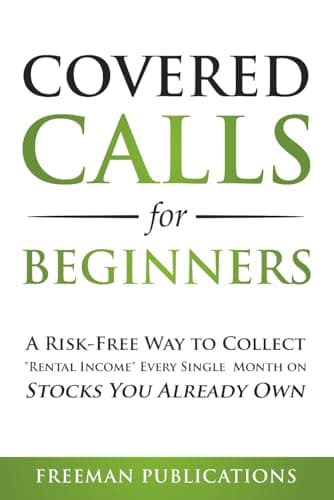
Covered Calls for Beginners
A "Risk-Free" Way to Collect Rental Income on Stocks You Already Own
Freeman Publications
A practical introduction to selling calls against shares you own. Covers choosing a strike, having shares called away, and opening the next trade.
Good for: A closer look at covered calls before moving on to other strategies.
The subtitle's "risk-free" is wrong, and it matters. A covered call carries the entire downside of owning the shares; the premium offsets a small part of a decline and nothing more. It also caps your upside, which is the real cost. Why this matters.
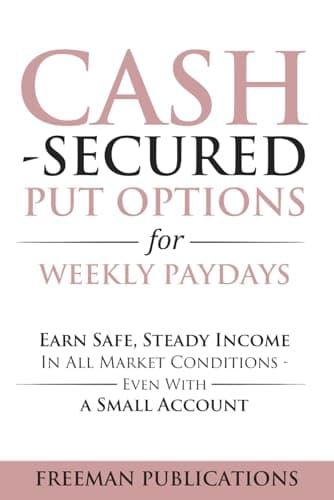
Cash Secured Put Options for Weekly Paydays
Income in All Market Conditions, Even With a Small Account
Freeman Publications
Walks through setting aside cash, choosing a put strike, and managing weekly trades. The discussion of collateral is useful for readers working with a smaller account.
Good for: Learning the put-selling side of the wheel alongside the covered-call book.
"Safe, steady income in all market conditions" overstates it. A cash-secured put has the same downside as owning the shares below your strike, and weekly cycles multiply the trading friction. You cross the bid-ask spread around a hundred times a year. Why this matters.
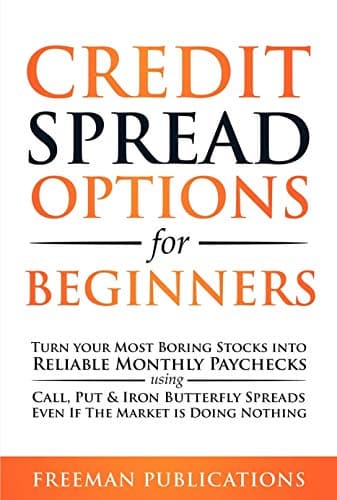
Credit Spread Options for Beginners
Call, Put and Iron Butterfly Spreads
Freeman Publications
Introduces call spreads, put spreads, and iron butterflies. Explains how the contracts fit together and how much capital a spread requires.
Good for: Understanding spreads when you want to limit the capital committed to a trade.
“Reliable monthly paychecks” is the wrong frame. A credit spread has a defined maximum loss, and that loss is several times the credit. One bad month can undo several good ones, which is why these are sized on the width, not on the income. Why this matters.
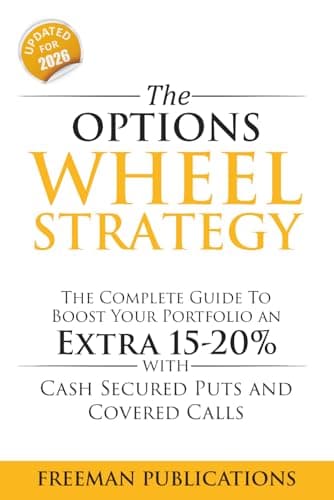
The Options Wheel Strategy
Cash-Secured Puts and Covered Calls, as One Cycle
Freeman Publications
Walks through a full wheel cycle: sell a put, take assignment, sell covered calls, and repeat after the shares are called away.
Good for: Following puts and covered calls through one connected trading cycle.
The cover advertises an extra 15–20% a year. Premium income tracks implied volatility and varies a great deal with the market regime; any fixed annual figure describes a good stretch rather than a strategy. Why this matters.
Go deeper
These longer references cover pricing, volatility, and trade management in more detail. You can work through them a chapter at a time or look up a specific topic.
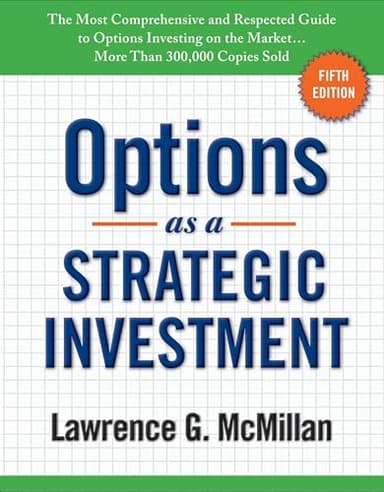
Options as a Strategic Investment
Lawrence G. McMillan · Fifth edition · 2012 · 1072 pp.
A detailed reference covering option strategies, payoff examples, and adjustments. The sections on covered calls, uncovered options, and rolling are relevant to premium sellers.
Good for: Looking up a strategy or adjustment when you need more detail.
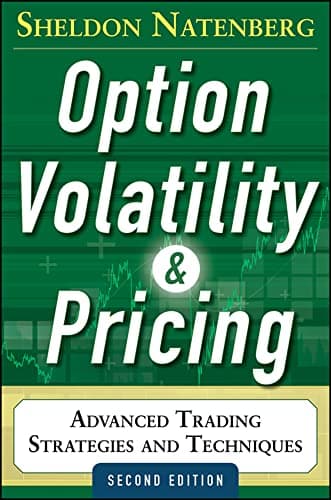
Option Volatility and Pricing
Advanced Trading Strategies and Techniques
Sheldon Natenberg · Second edition
Explains option pricing and volatility, then works through hedging, volatility spreads, and position management. Best suited to readers who are already comfortable with the basics.
Good for: Studying volatility and pricing after finishing the introductory lessons.
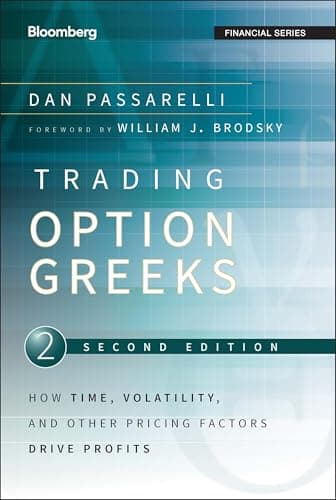
Trading Options Greeks
How Time, Volatility, and Other Pricing Factors Drive Profits
Dan Passarelli · Second edition · 2012
Looks closely at each Greek and how they interact. Covers individual contracts, whole portfolios, and the changes that happen as expiration approaches.
Good for: Building on the Greeks lessons with more examples of position management.
Links go to Amazon. They are not affiliate links, and nobody paid for a place on this list.